Missing a lesson? Keep skating from home
Our weekend lessons continue as scheduled, with adjustments for air quality. Many families of younger skaters, and children with heart or lung conditions, have given notice of leave for now, and we will arrange make-up sessions for them later. In the meantime, their skating does not have to stop. Below is a short home programme your child can do indoors, barefoot, with no skates and no equipment. It keeps the key movement patterns fresh so they return to the rink ready to pick up where they left off.
Our lessons follow Sport Singapore's Haze Management Plan and NEA's 24-hour PSI readings:
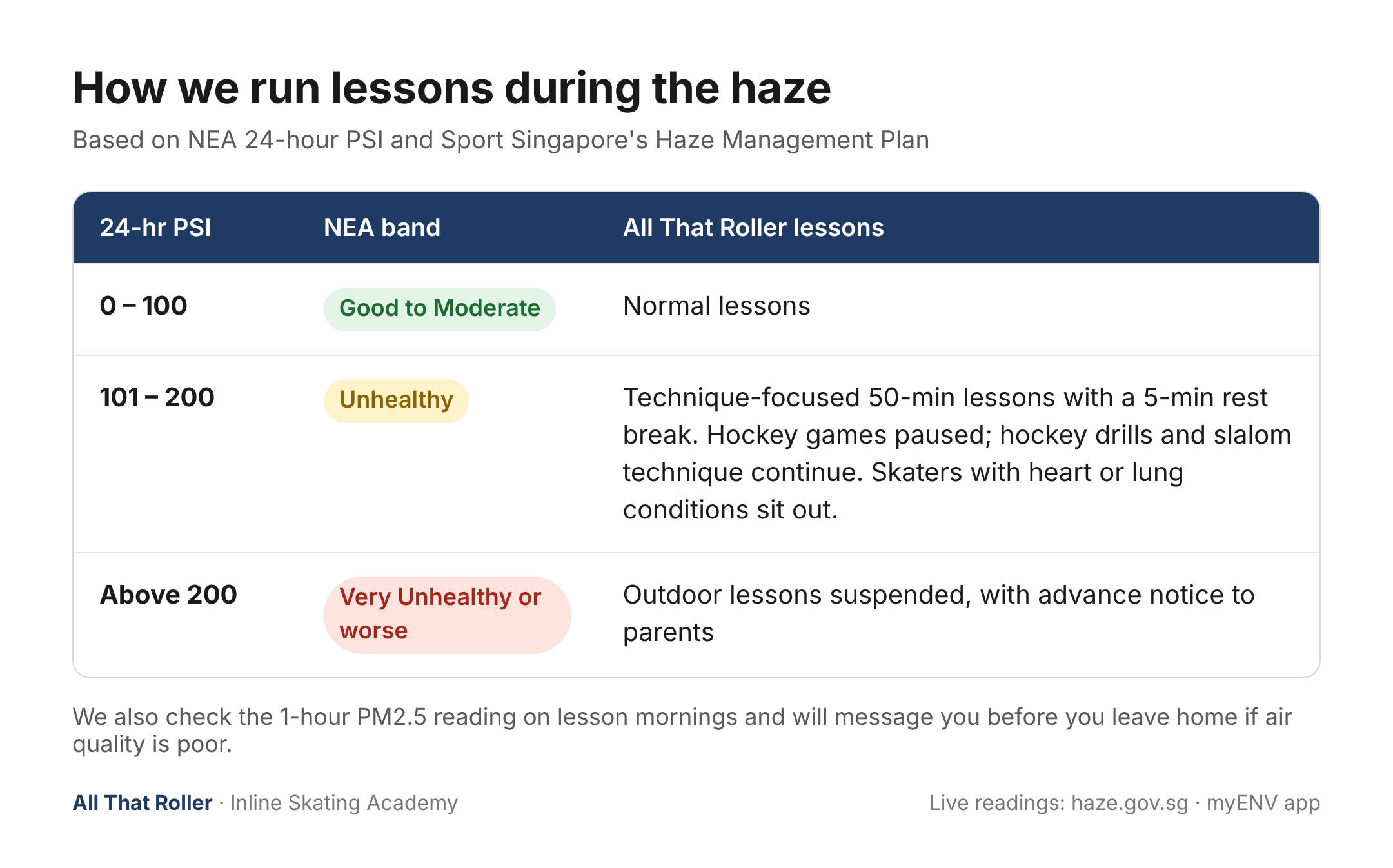
We also check the 1-hour PM2.5 reading on the morning of each lesson. If air quality looks poor on the day, we will message you before you leave home.
Home training: three parts, about 20 minutes
Every session has three parts: stretch the body, rehearse in the mind, then practise the movement barefoot. All of it is done indoors with windows closed, at an easy pace. This is not a workout; it is quiet, careful practice.
Before you start
Clear a space about two big steps wide, away from furniture and sharp corners.
Barefoot on a non-slip floor. No socks on smooth tiles or wood.
Choose a clear, sturdy wall for the wall drills.
Stop straight away if your child feels dizzy, coughs a lot or is short of breath.
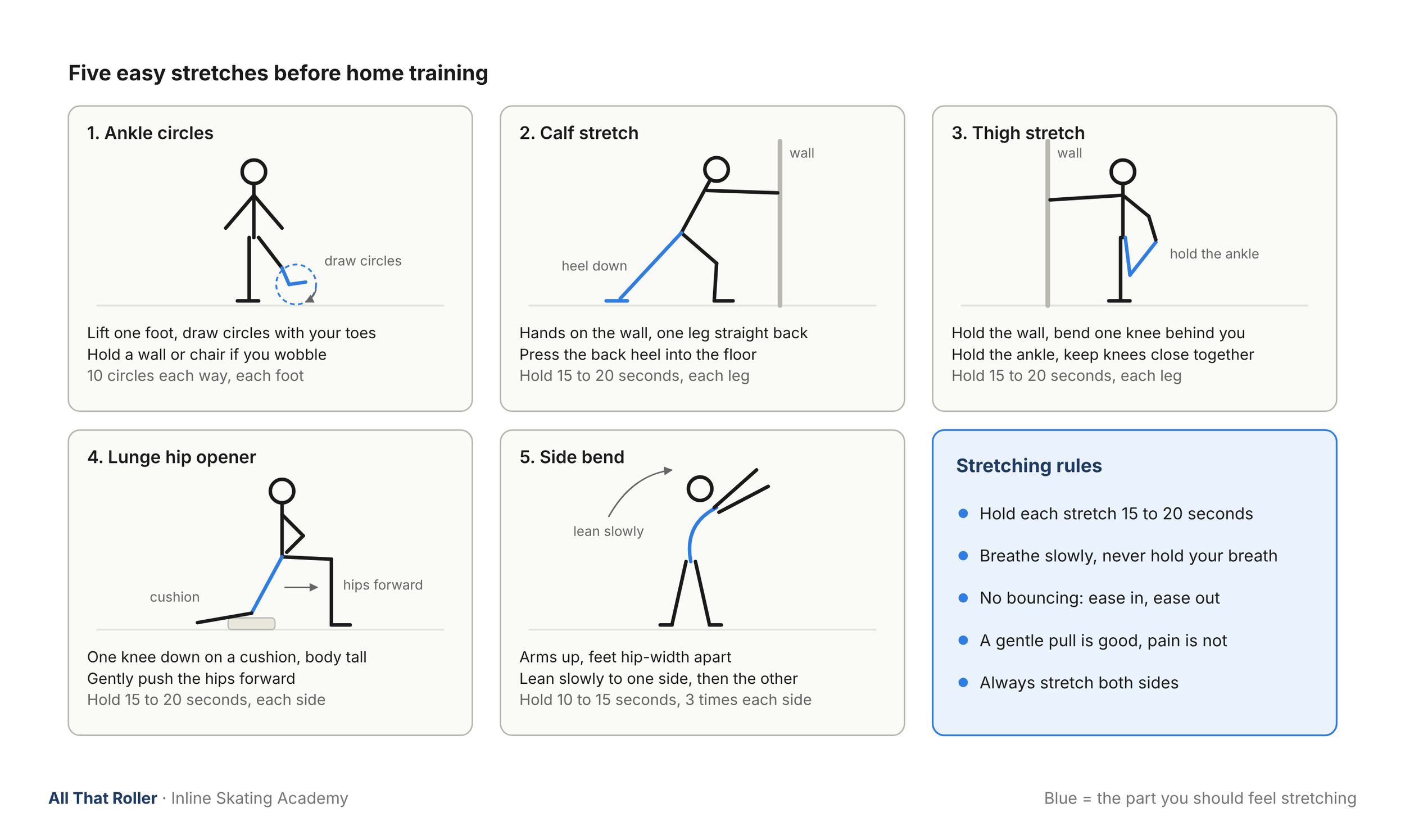
Part 1: Stretch (5 minutes)
Hold each stretch for 15–20 seconds, breathing slowly. No bouncing.
Ankle circles: 10 each way, each foot. Skaters' ankles do a lot of work.
Calf stretch: hands on the wall, one leg back with the heel down.
Thigh stretch: hold the wall, bend one knee and hold the ankle behind you.
Lunge hip opener: one knee down on a cushion, gently push the hips forward.
Side bend: arms up, lean slowly to each side.
Part 2: Image training (3–5 minutes)
Top athletes rehearse skills in their heads, and it works for children too. Pick ONE skill your child finds hard, such as backward criss-cross, a T-stop or a one-leg glide.
Sit or lie down comfortably and close your eyes.
Picture yourself at the rink, in your skates, in your ready stance.
Go through the skill slowly, step by step, as if watching through your own eyes. What do your feet do? Where do you look? Where is your weight?
Say each step out loud. Parents: ask "What comes next?"
Run it 3–5 times, each time a little smoother. Finish by imagining doing it perfectly.
Part 3: Dryland drills, barefoot (10 minutes)
Now do the same movements on your bare feet, without skates. The body learns the shape and balance, so it feels familiar when the skates go back on.
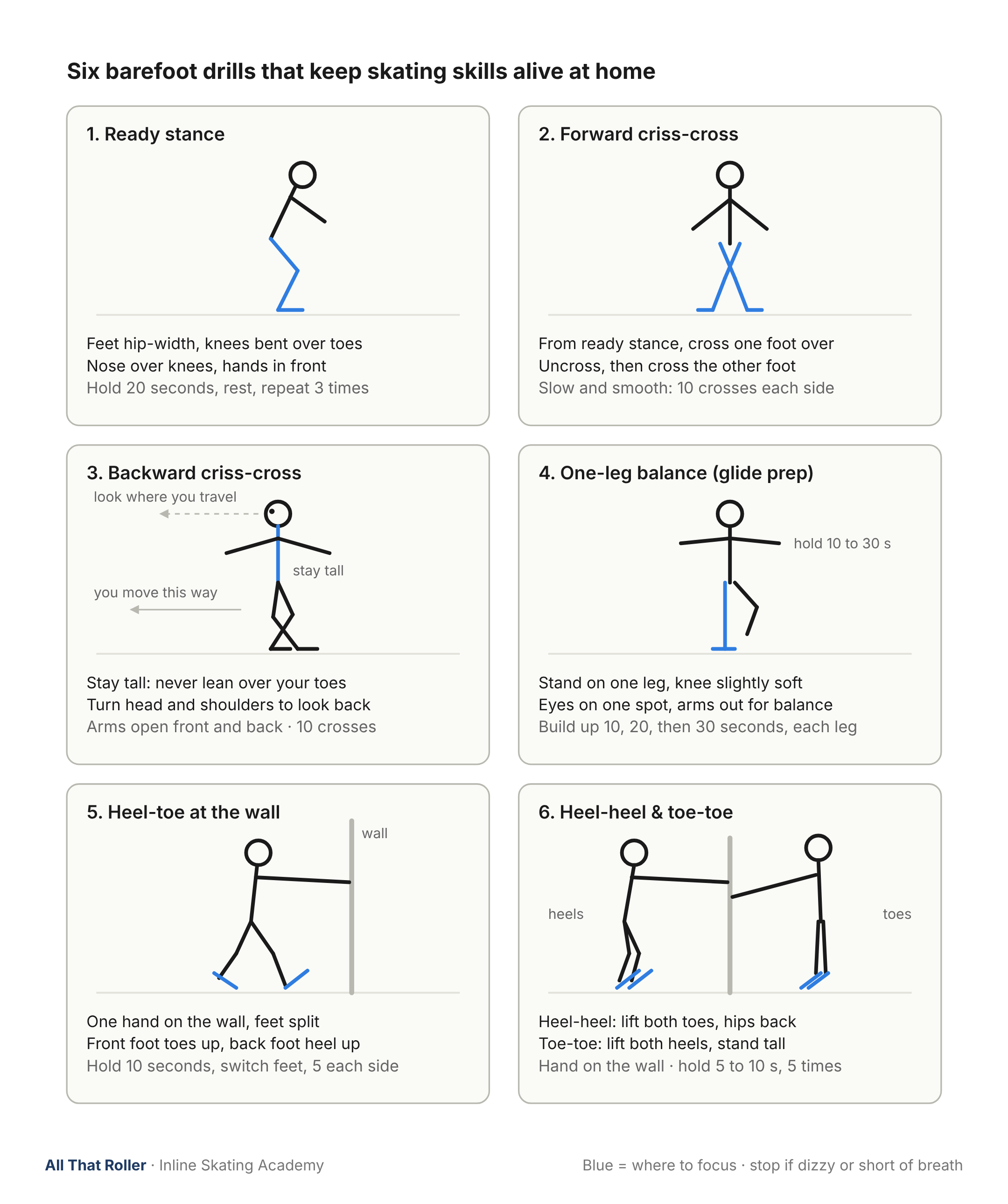
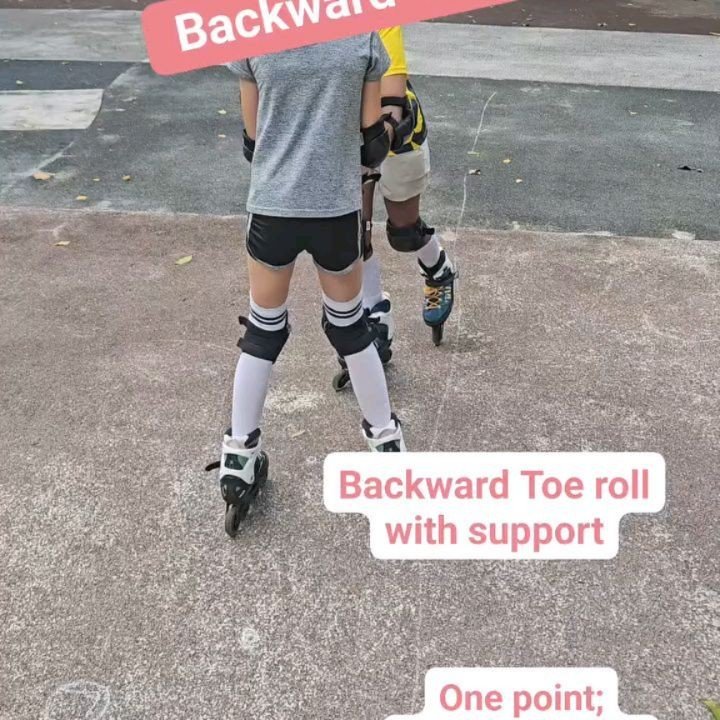
Go slowly and keep the ready stance in every drill: knees bent, nose over knees. For backward criss-cross, keep the upper body upright: leaning toward the toes lifts the heels and tips the skater forward. Turn the head and shoulders to look where you travel, with arms open front and back for balance. For the wall drills, start with the whole hand on the wall, then try two fingers, then one.
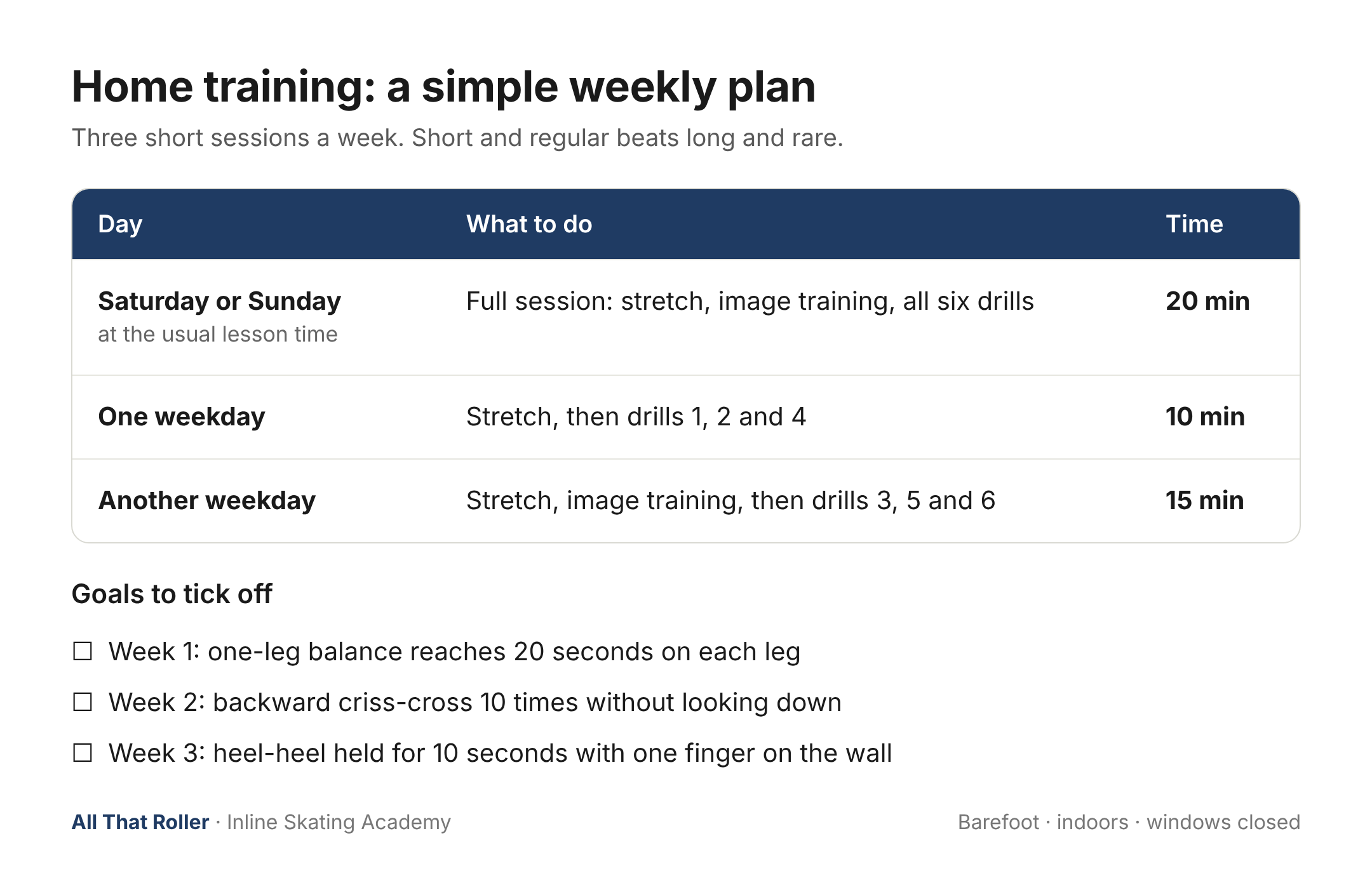
A simple weekly plan
Three short sessions a week is enough. Short and regular beats long and rare.
Staying healthy during the haze
Children breathe faster than adults and take in more air for their size, which is why health authorities place them in the more sensitive group. The single most effective step is simple: reduce time spent outdoors when the air is poor. The tips below follow Ministry of Health and NEA guidance; they are general advice, not a substitute for your own doctor.
NEA's advice at Unhealthy levels is to reduce prolonged or strenuous outdoor exertion, with extra caution for young children. Our lessons are technique-based and moderate in intensity, so during this period each 50-minute session includes a 5-minute rest break and hockey games are paused. Skaters with heart or lung conditions sit out.
Check the air before you plan
Use haze.gov.sg or the myENV app.
The 24-hour PSI is for planning tomorrow. The 1-hour PM2.5 reading is for deciding what to do in the next hour.
Keep indoor air clean
Close windows and doors when readings are high.
Run the air-conditioner on recirculate, not fresh-air mode. Do the same in the car.
An air purifier with a HEPA filter helps most in the room where your child sleeps. Choose one sized for that room.
Avoid adding smoke indoors: no smoking, incense or candles.
Drink, eat and sleep well
We cannot avoid the haze, but we can help our bodies stay strong through it. Haze irritates the nose, throat and airways, and irritated airways catch colds and flu more easily. These everyday habits, all backed by good evidence, keep your child's natural defences working well.
Sleep: the most powerful habit of all. The body repairs itself and builds its defences during sleep. Primary-school children generally need 9–12 hours a night, teenagers 8–10. Keep a regular bedtime, with screens off an hour before.
Water: offer water through the day, more than usual. It keeps the throat and airways moist. Plain water beats sweet drinks.
Food: some protein at every meal (eggs, fish, tofu, lean meat, beans) and fruit and vegetables of many colours. Cut back on sweet drinks and snacks. Food gives children the vitamins they need; there is no evidence that any supplement protects against haze, so check with your doctor before giving one.
Flu vaccination: flu circulates all year in Singapore. A yearly flu jab lowers the chance that a flu infection lands on top of haze-irritated airways. Ask your family doctor or polyclinic.
Hand washing: wash with soap for 20 seconds after coming home, before eating and after coughing or sneezing. Families spend more time indoors together during haze, so germs spread more easily.
Keep moving indoors: regular, moderate activity supports the immune system. The home programme above does exactly that.
No smoke at home: second-hand smoke on top of haze doubles the strain on a child's airways.
Honey for coughs: a spoonful of honey can ease a cough in children over 1 year old. Never give honey to babies under 1 year.
Irritated eyes: rinse with clean water and try not to rub them.
Masks: what they can and cannot do
Indoors and for short trips (home to car, car to school), masks are not needed.
N95 masks are not certified for children. They are made to seal on adult faces and will not fit a small child well. For children, staying indoors is the protection.
Teenagers and adults who must be outdoors for several hours on bad days may use a well-fitted N95. Remove it if breathing becomes uncomfortable.
Never exercise hard while wearing an N95.
Adults with heart or lung conditions, and pregnant women, should ask their doctor before using an N95.
Ordinary surgical and cloth masks do not filter fine haze particles well.
Children with asthma or other lung or heart conditions
Keep reliever inhalers and medicines with your child and check they are not expired.
Follow the asthma action plan from your doctor, and tell the coach about it before lessons resume.
Keep these children indoors on days the PSI is in the Unhealthy range or worse.
When to see a doctor
See a doctor if your child has a cough that will not settle, wheezing, chest tightness, unusual tiredness, or any breathing trouble. If a child is struggling to breathe or cannot speak in full sentences, call 995.
Lessons continue as scheduled
Our weekend lessons are going ahead, adjusted to the day's air quality as shown in the table above. Skaters who have given notice of leave will be offered make-up sessions, and we will contact you to arrange them. Until then, this home programme keeps them on track, so they return steadier and more confident. Questions about training or make-up sessions? Message us any time.
Coach Moon and the All That Roller team
Sources
Sport Singapore Haze Management Plan (5-phase response, 24-hour PSI and 1-hour PM2.5)
Ministry of Health: Health advisory for the general public (N95 use and children)
Keep rolling,
Coach Moon
Head of coaches, Programme manager.
(B.A.) Sport Science, M.A.(Physical Education)
©️All That Roller Ptd Ltd