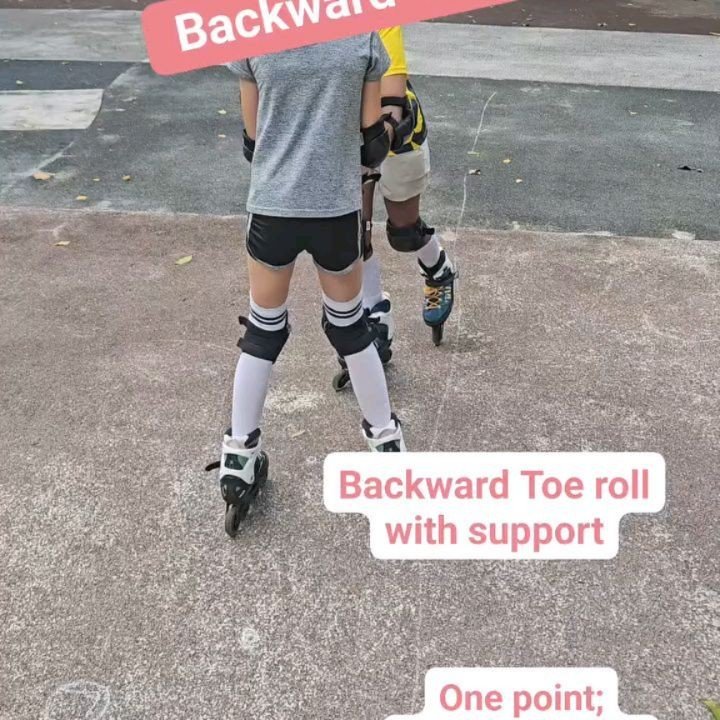
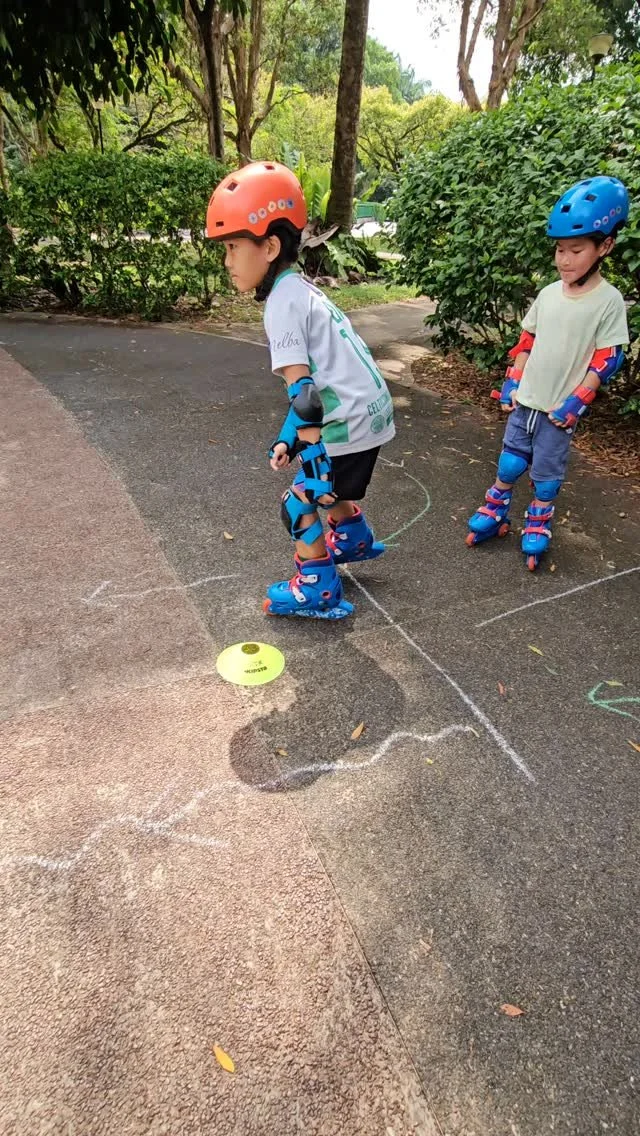
When you skate backward down a slope, keep your knees bent and your chest up. It sounds simple, but it is the opposite of what scared beginners do.
Going forward downhill, we teach skaters to lean forward. So when they turn around and roll backward, many instinctively hunch over too, especially when they feel nervous. That hunch is exactly what puts them on the ground. Here is why, explained through basic balance mechanics.
The real rule: stay square to the slope
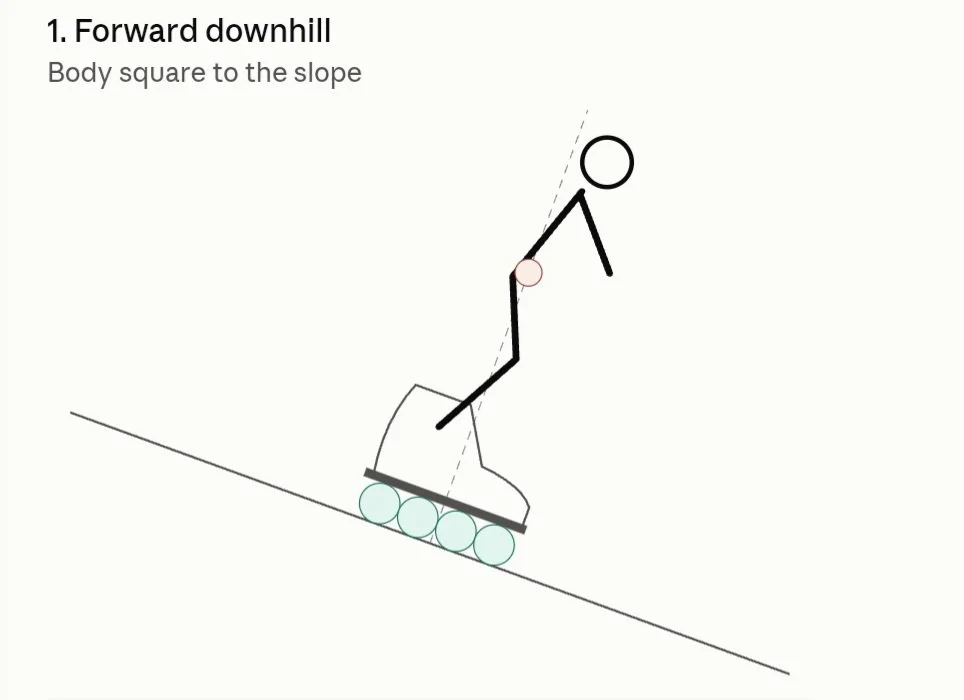
On a downhill, your skates and your body accelerate together. Because of that, your balance line is not straight down toward the ground. It runs perpendicular to the slope surface.
To stay balanced, your center of mass should sit on that line, right above the middle of your frame. Going forward downhill, standing square to the slope means your body tilts toward the bottom of the hill. That is why it looks and feels like leaning forward.
If you stand straight up relative to gravity instead, your weight stays behind your skates. The skates roll away and you sit back. Every coach has seen that fall.
Why backward is different
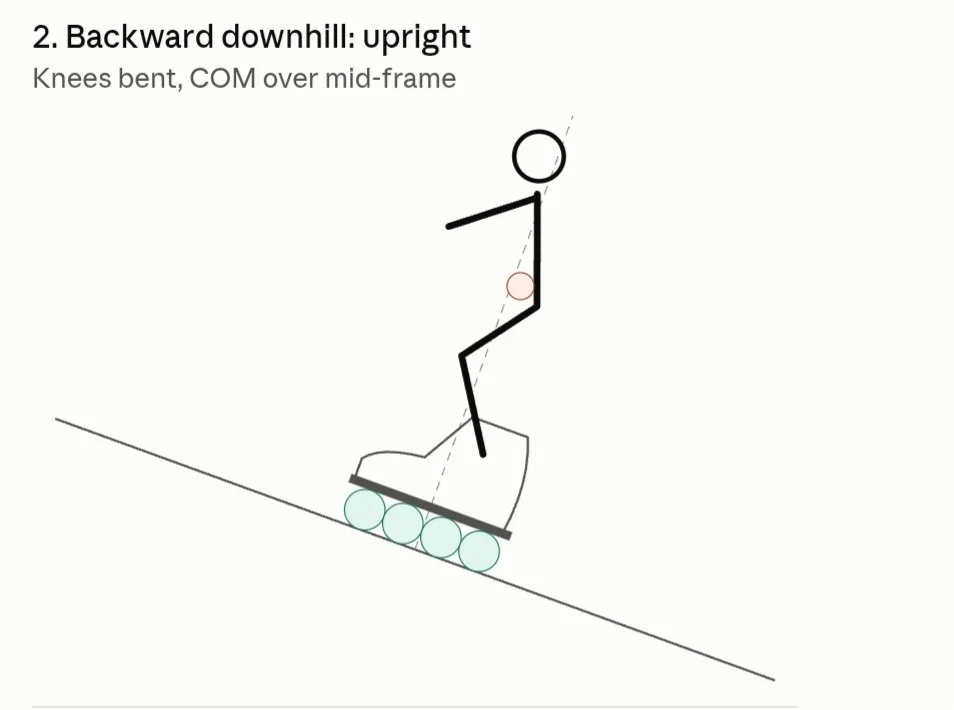
The same rule applies going backward. In theory, you should tilt slightly toward the bottom of the hill, which now means leaning back.
The problem is anatomy. Your ankle joint does not sit over the middle of your foot. It sits near the back, close to the heel. There is plenty of foot in front of the ankle, but very little behind it.
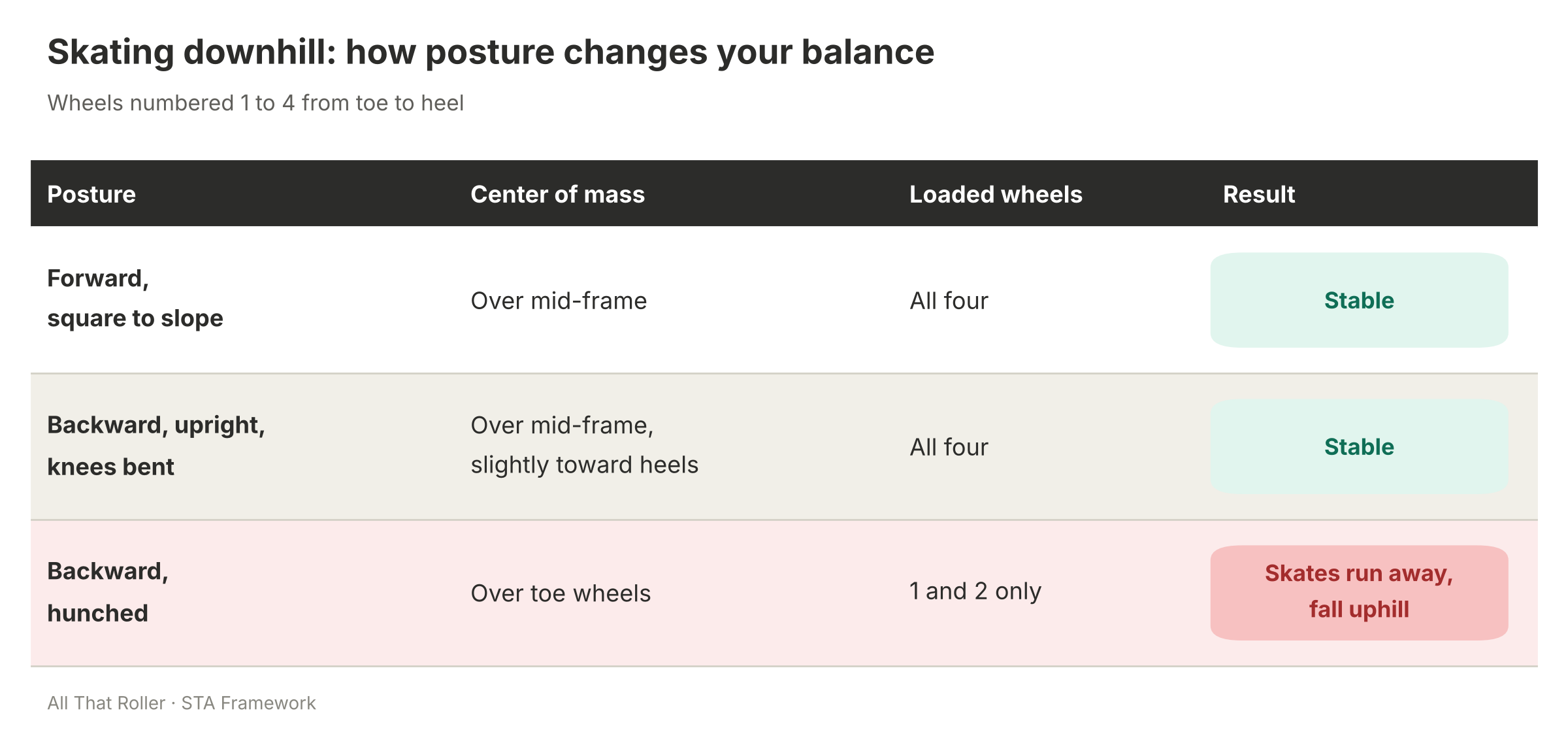
That short heel side gives you almost no room to lean back safely. So the practical target is simple: if you cannot lean back, at least stay upright. Bend your knees, keep your chest up, and let your hips sit over your heels. That keeps your center of mass close to the middle of the frame.
What happens when you hunch
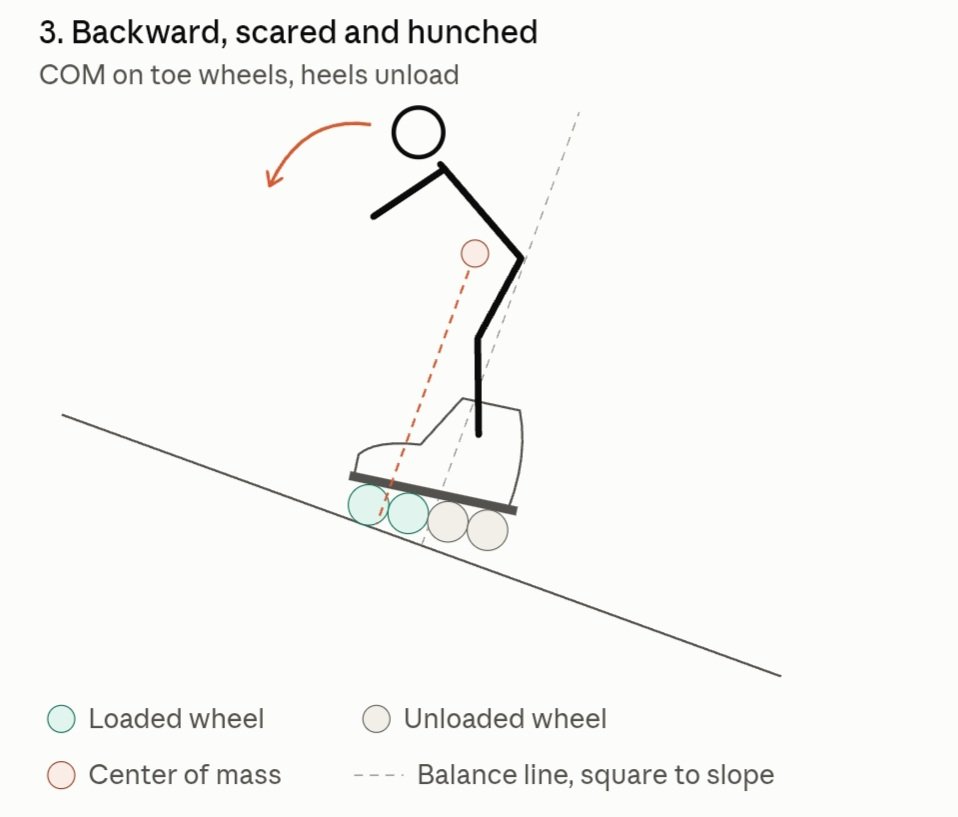
Hunching over while rolling backward moves your weight toward your toes, which are now on the uphill side. Here is the chain reaction, with wheels numbered 1 to 4 from toe to heel:
1. Your center of mass shifts onto the toe wheels (1 and 2).
2. The heel wheels (3 and 4), which are leading the way downhill, lose their load. In bad cases they lift off the ground.
3. You are now balancing on two wheels instead of four, so your base of support shrinks.
4. Meanwhile the slope keeps pulling the skates downhill. They run out from under you while your upper body stays behind on the uphill side.
5. You fall forward, toward the hill.
The smaller base makes you wobbly, but step 4 is the real cause of the fall. Your weight is uphill of your support while your skates are accelerating away.
Coaching cues
• Chest up, eyes level. Look over your shoulder to check the path, but do not fold at the waist.
• Knees bent, hips over your heels. Think of sitting slightly into a chair behind you.
• Feel all four wheels. If your heels feel light, you are leaning too far forward.
• Start on a gentle slope. Fear causes the hunch, so build confidence before adding speed.
The takeaway: going forward downhill, lean with the slope. Going backward, you cannot lean back much, so stay upright. Keep your weight over the middle of the frame, and the hill will not pull the skates out from under you.
Keep rolling,
Coach Moon
Head of coaches, Programme manager.
(B.A.) Sport Science, M.A.(Physical Education)
©️All That Roller Ptd Ltd