Why Young Beginners Fall
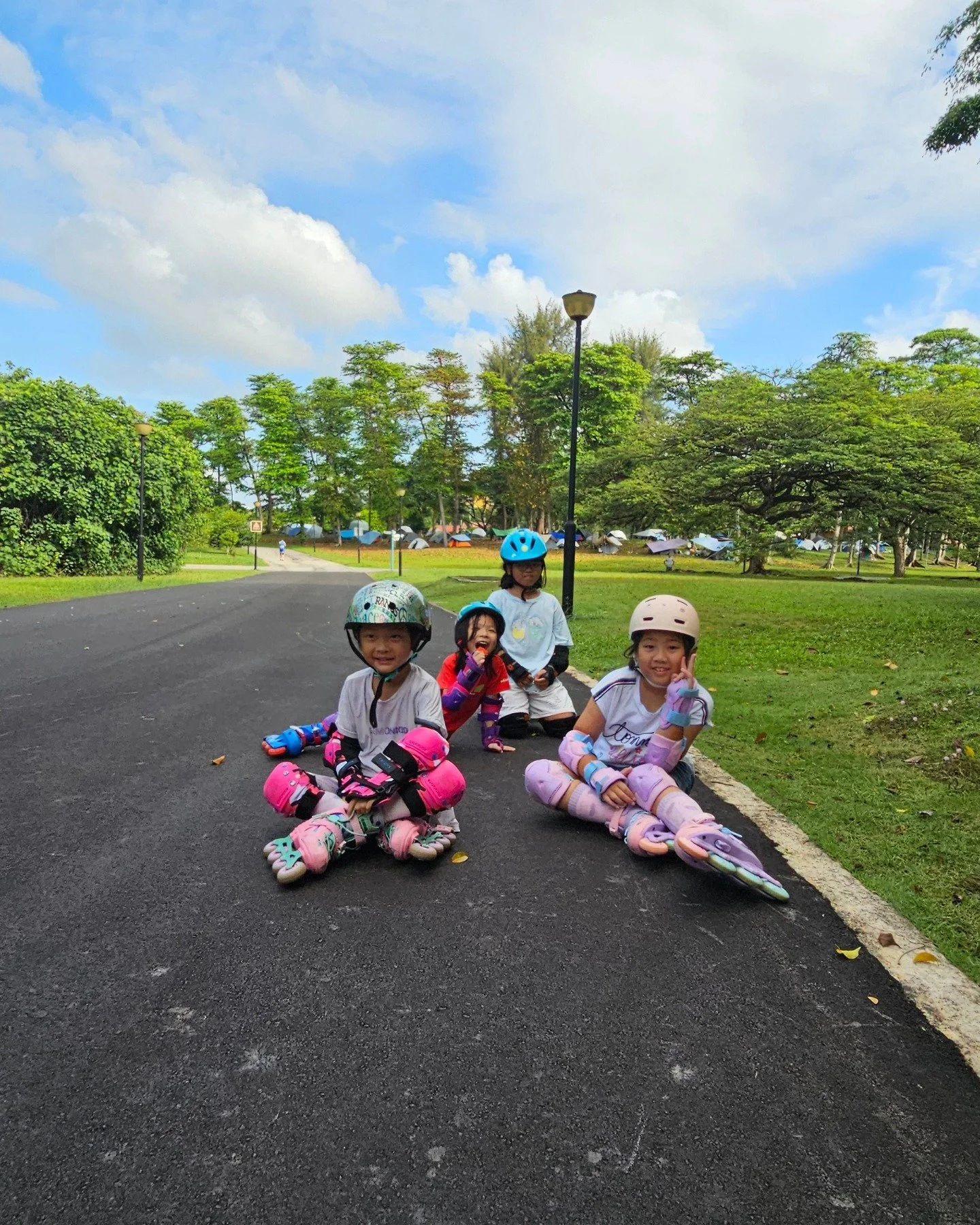
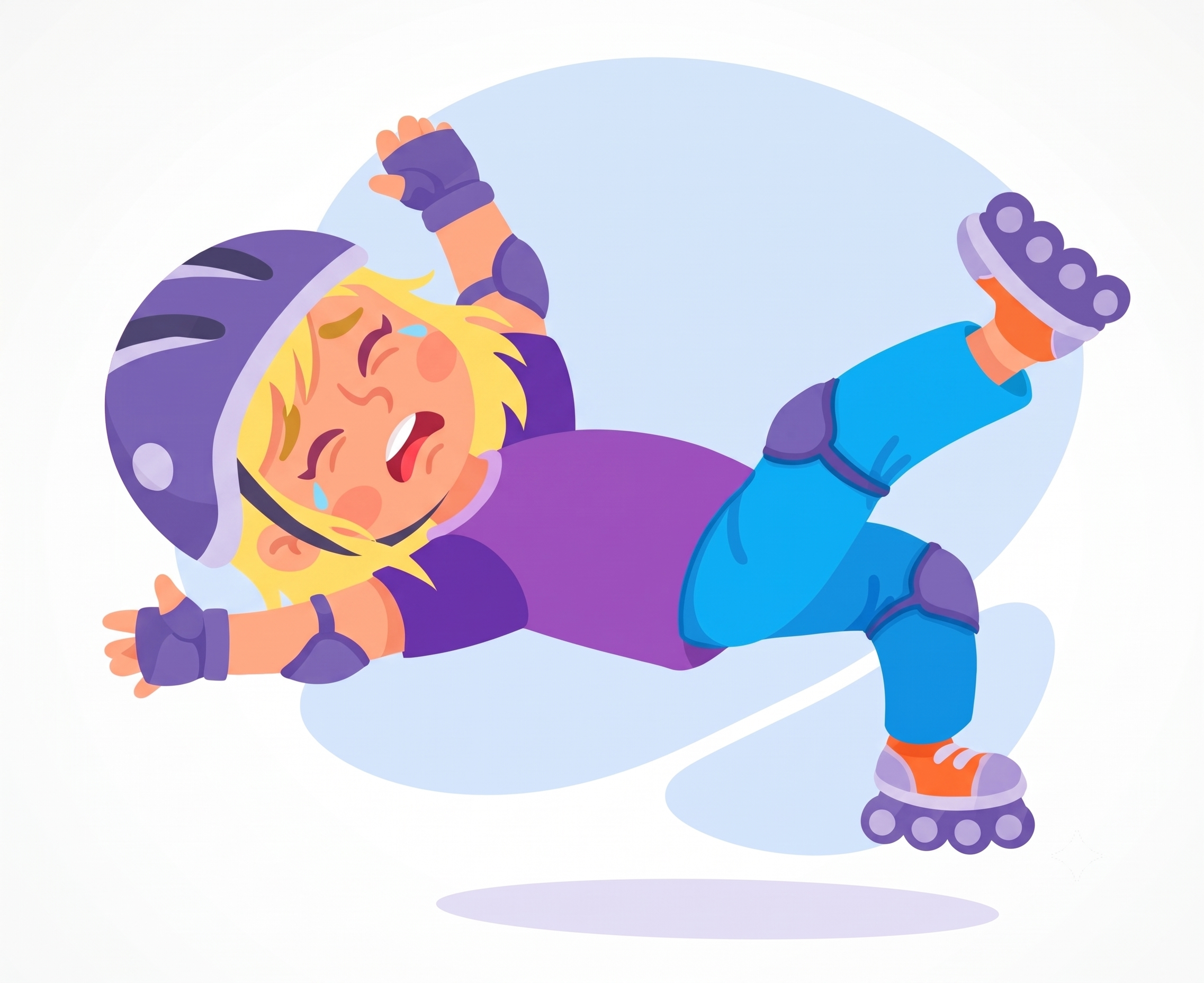
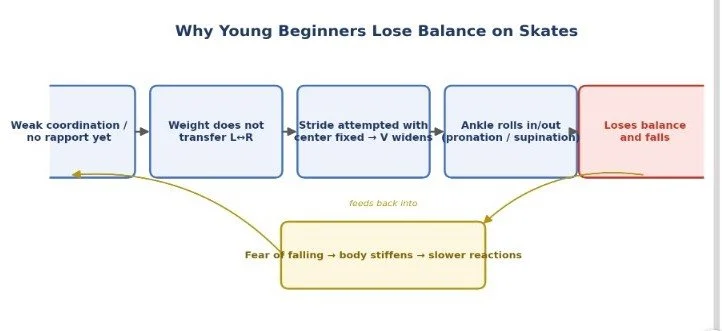
Coaches on probation often struggle with 4–5 year-olds who haven't built rapport with them yet, or who still lack coordination. Here is what's actually happening physically when a young beginner loses balance:
Weight doesn't transfer properly from the right foot to the left foot (and back).
Because the center of mass stays fixed in the middle, the legs are forced wide apart into a V-stance when stride is attempted.
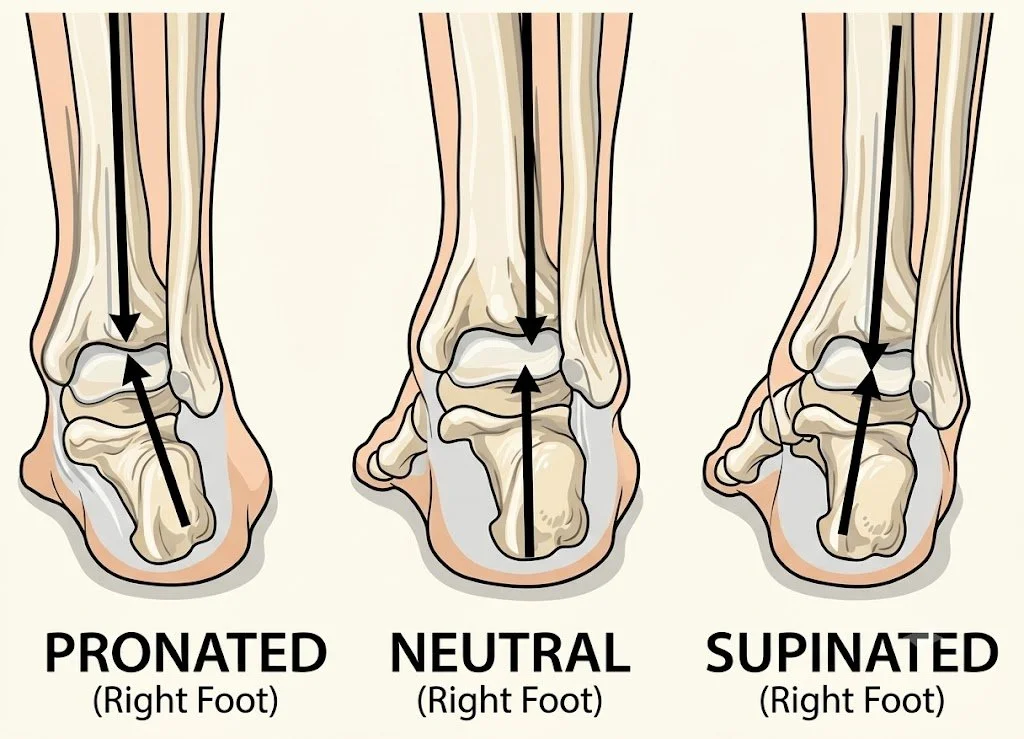
The ankles are still weak, so they roll inward (pronation) or outward (supination) instead of staying stable.
The result: the student loses balance and falls — which then creates fear, stiffens the body, and slows down reactions even further.
Why Grass Practice Is the Fix
Practicing on grass first is almost magical for beginners, and here's the coaching logic behind it:
Grass has much higher friction than a skate wheel on pavement, so it's far easier for a child to find and hold their balance.
The coach doesn't need to hold every child's hand individually — this saves time and makes the session more efficient.
Falling on grass doesn't hurt, so children get a psychological reward: confidence instead of fear.
Walking, running, and hopping on grass builds coordination (left-right weight transfer) and ankle/leg strength.
Once fear is reduced and coordination and ankle strength improve, weight transfer becomes natural — and stride on flat ground follows quickly.
Coach's takeaway
Grass practice is not a warm-up filler — it directly builds the three ingredients stride depends on: confidence, coordination, and ankle strength. Treat it as a required stage, not an optional one.
Grass Drill Menu
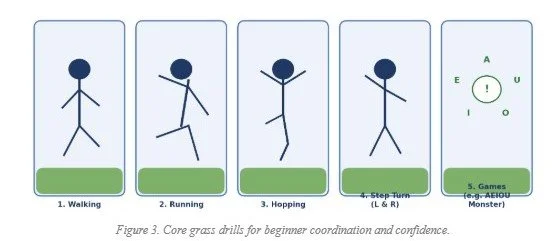
Walking — basic gait pattern and left/right weight-transfer awareness.
Running — builds reaction speed and balance.
Hopping (single-leg) — builds ankle strength and one-leg support.
Step turn (left & right) — rehearses the weight shift used later in skating turns.
Games (e.g. “AEIOU Monster”) — disguises repetition as play, so children run and walk more without realizing it's practice.
Rainy-day option: if the grass is wet, lay out fitness mats indoors and run the same drills on the mats.
Delivery Tip: Coach Like a Disney Character
The drills only work if the delivery keeps children engaged. This is just as important as the drill content itself:
Use a wide range of vocal tone — exaggerated highs and lows, like narrating a story, not lecturing.
Use big, exaggerated gestures and facial expressions — think of a Disney cartoon character bringing a scene to life.
Demonstrate first, narrate as you go, and react enthusiastically to what the children do.
Praise generously, even for small attempts — this builds the rapport that's often missing in the first weeks of probation.
Why this works
Children fall in love with a coach's energy before they fall in love with the sport. A lively voice and exaggerated gestures turn repetitive drills into something kids ask to do again — which means more practice reps without it feeling like practice.
Keep rolling,
Coach Moon
Head of coaches, Programme manager.
(B.A.) Sport Science, M.A.(Physical Education)
©️All That Roller Ptd Ltd